

A question I encounter often is “How much Japanese should I study before I can begin reading in Japanese?” You can and should start way earlier than you probably think!
When learners ask that question about reading in Japanese, they usually mean reading for pleasure at the level they are used to reading in their mother tongue. They are willing to put in the work of studying Japanese vocabulary and grammar for years to reach that level and are asking in the hopes of getting an estimate.
But reading in Japanese is a skill that needs to be trained seperately and in addition to memorizing vocabulary and grammar. In my honest opinion, it makes little sense to put off reading until a later point in your studies. You will get better at reading, by reading more.
That’s why my recommendation is to start reading as early as possible. But the key is to start reading at your own level.
There are several resources for reading in Japanese that only require knowing hiragana. Those texts usually teach vocabulary through pictures and only use basic grammar. If you are an absolute beginner, that is all you need and already the perfect place to start reading in Japanese.
The Japan Foundation: NIHONGO FLIPBOOKS
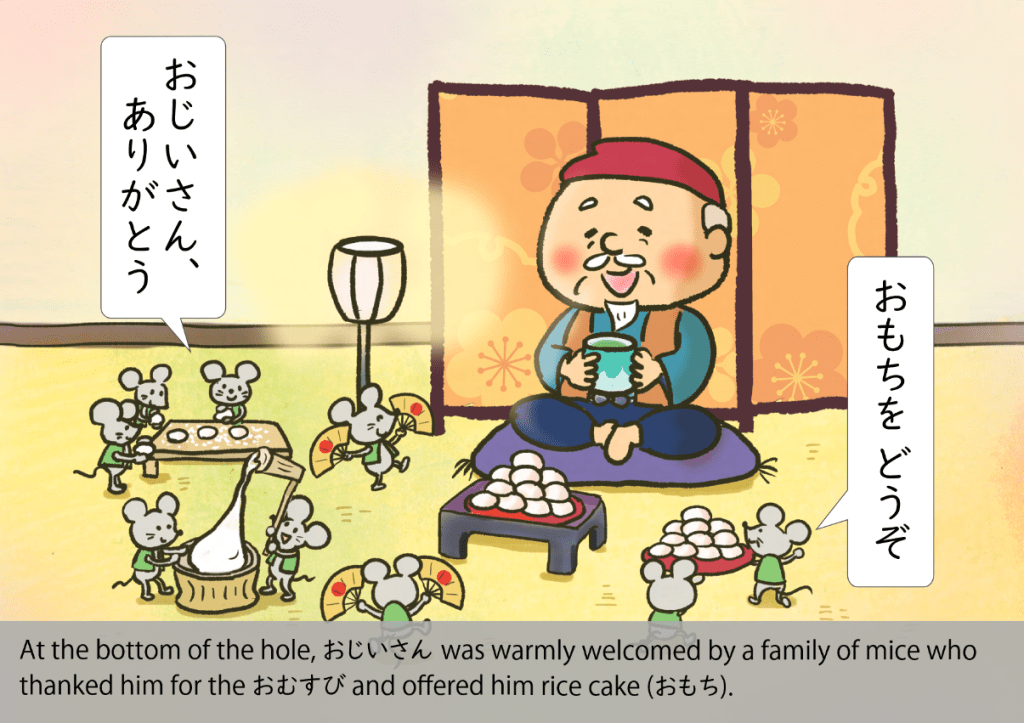
These picture books are excellent both for first time readers and young learners. The story itself is mostly written in English but main nouns in the text and all exclamations in the illustrations are in Japanese and 100% in Hiragana.
This structure allows you to experience a Japanese folkstory while still practicing your recognition of Japanese characters.
The Japan Foundation: Hiragana Books
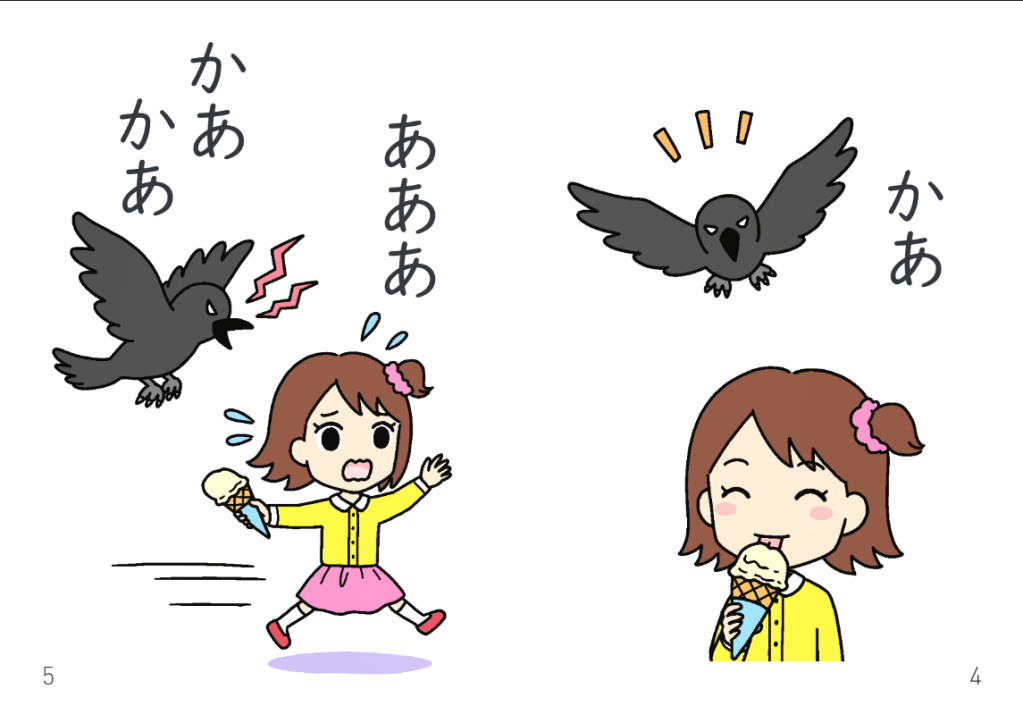
The Japan Foundation’s Hiragana Books are great for those, who are still remembering hiragana characters. Every short book introduces only 1-2 new characters, so it’s a great reading exercise for everyone who has just started.
There is no English translation for these books, but vocabulary can be derived from looking at the illustrations.
NPO Tagengo Tadoku: どうぞ、どうも
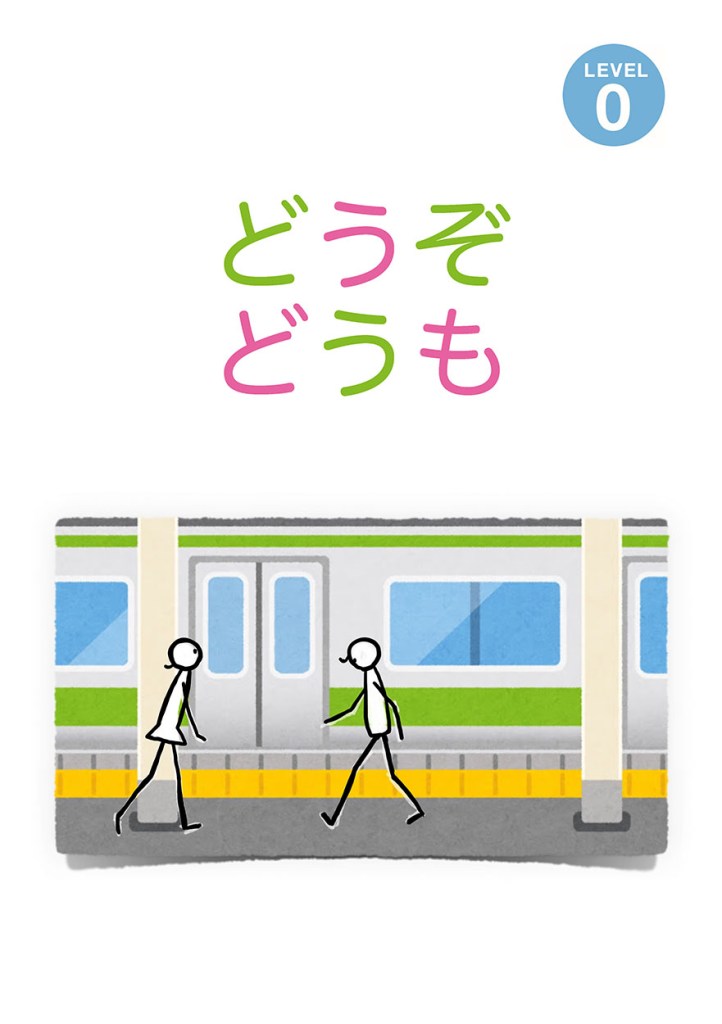
The free graded reader 「どうぞ、どうも」 by the NPO Tagengo Tadoku only uses the words 「どうぞ」 and 「どうも」 to write an entire story. Again, this makes for a great exercise in reading hiragana and understanding context.
Another “level 0” recommendation by the same NPO would definitely be 「しろい?くろい?」. This book uses the full range of hiragana characters but the grammar is simple and all used vocabulary is illustrated. It uses the particles は and も.
Nihongo Tadoku Dōjō: スマホ

Another site with great resources for absolute beginners is Nihongo Tadoku Dōjō. If you have memorized both hiragana and katakana and know how particles を , で and と work, you will be able to read their “N6” rated text about smartphones. There are also audio options for this text.
Compared to the resources above, this text is more difficult. Although the sentence patterns mostly remain the same, it has a broader range of vocabulary.
The resources I recommended so far can all be accessed completely free via the websites have linked. If you have the money to spare, I have 2 more resources in very simple Japanese to recommend. Both are physical books and while you can definitely order them online e.g. via amazon japan, they are also sometimes available in book stores that sell Japanese textbooks.
レベル別日本語多読ライブラリー:スタート
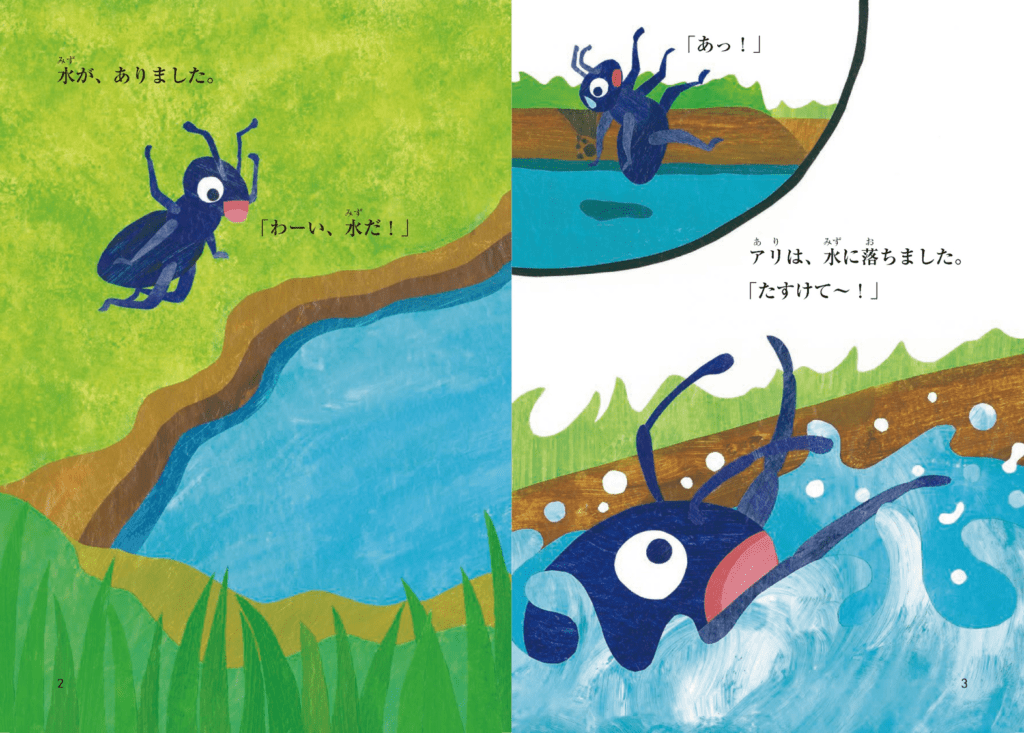
The NPO Tagengo Tadoku which I have recommended above has cooperated with the publisher ASK on the series reberubetsu nihongo tadoku raiburarī (affiliate link). And this box named START includes 8 short and colorful books in very simple Japanese. Below are some impressions from 3 of those 8 books. All books in this box have the same reading level aimed at absolute beginners.


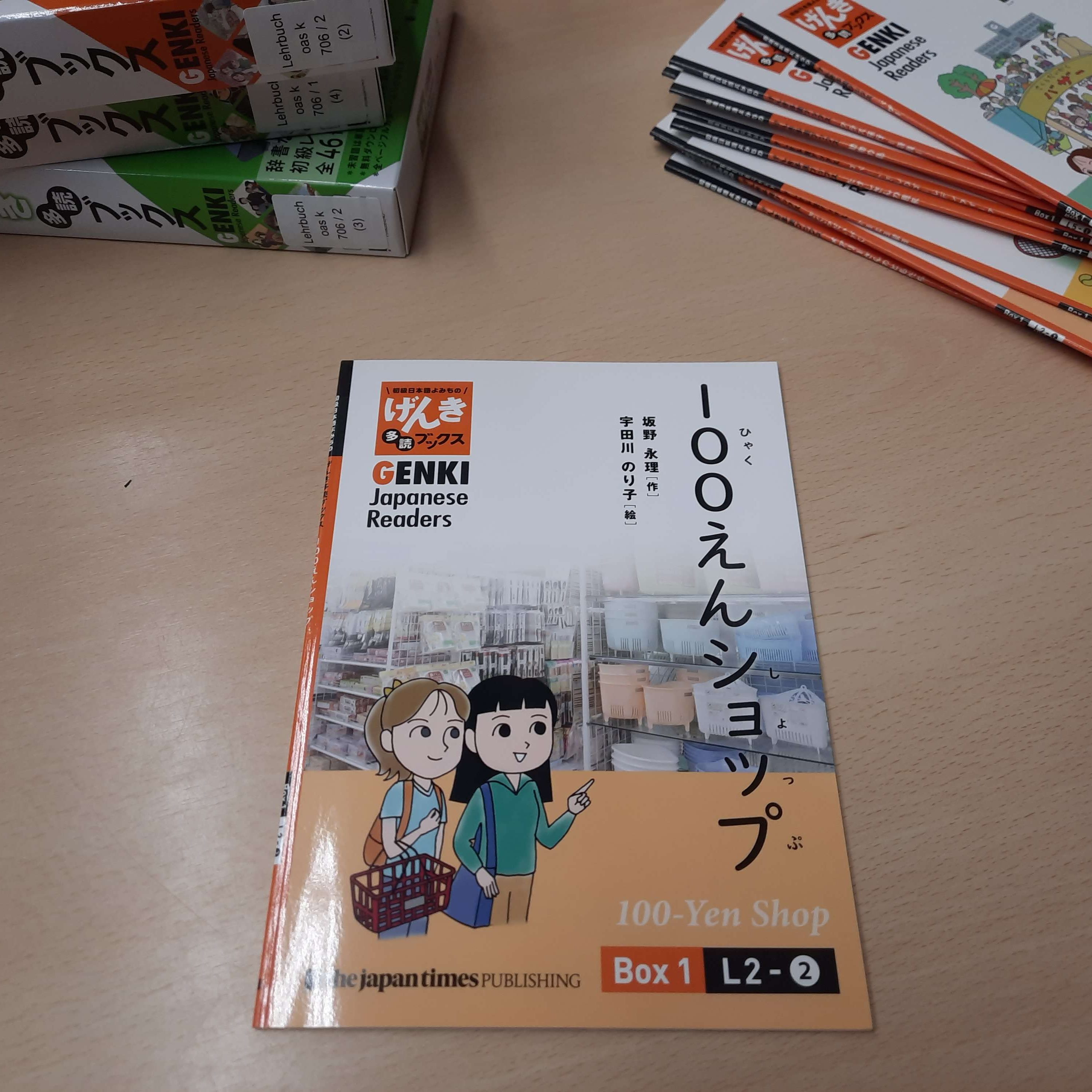
げんき多読ブックス:100えんショップ
My second physical book recommendation is the first box of the Genki Tadoku books graded reader series (affiliate link). The stories are written to fit the vocabulary and grammar of the Genki textbook lessons and although they sometimes feature characters from that textbook, you don’t need to have worked with it to enjoy the stories. The pictures below are from the “100-Yen Shop” story which is recommended to learners who have finished lesson 2 from the textbook. Stories in this box get a bit more complex with each book, featuring both more vocabulary and grammar the further you read.

All these texts for absolute beginners will get you started reading in Japanese with very little knowledge of characters and vocabulary.
Reading in Japanese is a skill that requires practice. But once you get used to it, it can be a valuable tool to reinforce new vocabulary and grammar while exploring new stories at the same time. So please don’t wait until you’re “ready” before you start reading – start early at your own level!
If the resources above are a bit too simple for your current level, feel free to have a look at my free online resources for N5 or look through my book recommendations for readers with abilities about JLPT N5.

 dokushoclub.com